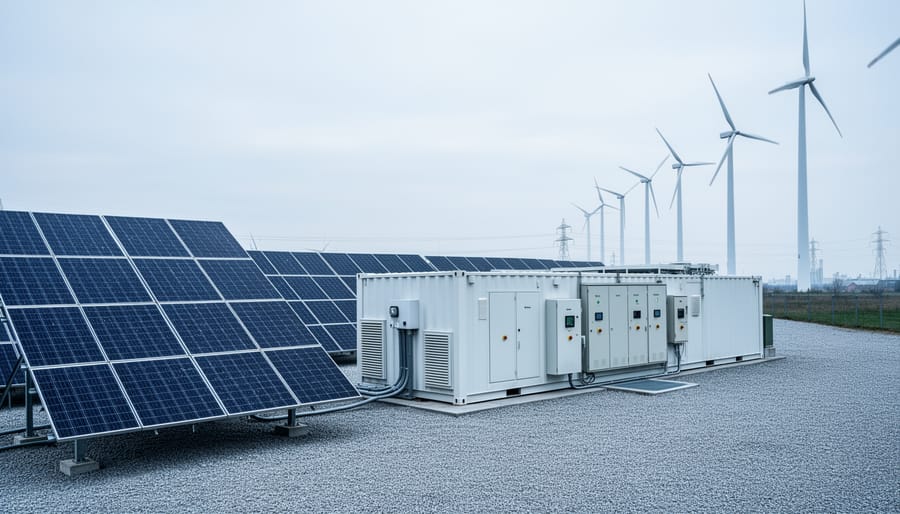
Power hybrid plants are redefining renewable energy deployment by combining generation sources like wind and solar with battery storage at a single grid connection point, and 2026 data confirms their transformation from niche experiment to mainstream infrastructure strategy.
The numbers tell the story. Through the end of 2025, utility-scale solar led new capacity additions with 27 GW commissioned, while renewables overall captured 61% of new power-generating capacity. But the real shift sits in the interconnection queues: approximately 11 GW of wind capacity, representing 5% of the 225 GW queued, is now proposed as hybrid configurations, predominantly pairing turbines with storage. In California’s grid operator territory alone, 400 battery storage projects totaling 119,441 MW of planned capacity are moving through development pipelines as of October 2026.
This matters because hybrids solve two critical grid challenges simultaneously. They maximize the value of costly interconnection infrastructure by running multiple revenue streams through a single connection. And they shift intermittent renewable output to match demand peaks, fundamentally changing how wind and solar compete with dispatchable generation.
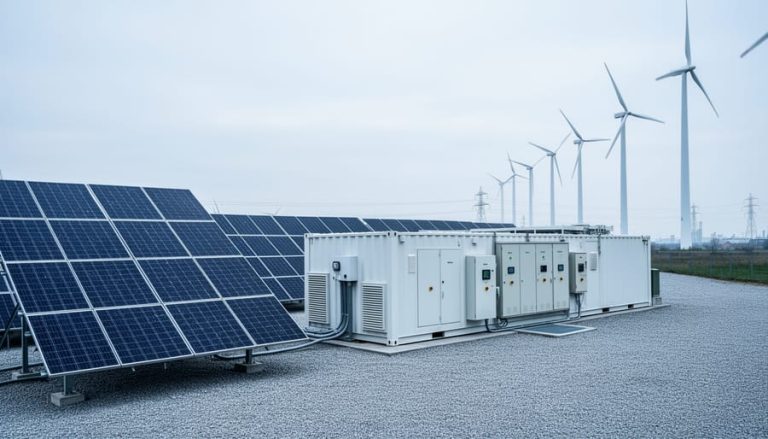
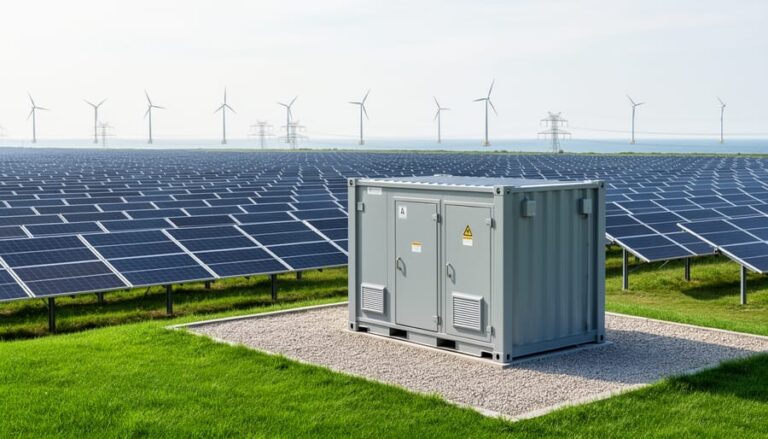
The structure is straightforward: a solar array or wind farm shares grid infrastructure and often permitting footprints with co-located batteries. The storage charges when generation exceeds transmission capacity or prices drop, then discharges when economics or grid needs dictate. This configuration turns what were once must-take, price-volatile resources into flexible, schedulable assets.
What started as opportunistic pairing in a handful of markets has become standard practice where interconnection capacity constrains renewable growth. The question for energy professionals is no longer whether hybrids make sense, but how quickly deployment can scale to match the queue.
What Changed: The Power Hybrid Market Through 2025
The renewable energy landscape underwent a fundamental reconfiguration through 2025, moving decisively away from the standalone solar farm or wind park model that dominated the previous decade. Where developers once built generation-only projects and viewed battery storage as a separate, optional addition, the industry has pivoted toward integrated hybrid systems that combine renewable generation with co-located energy storage from the design phase forward.
This shift reflects more than an incremental improvement in project planning. Power hybrids solve multiple challenges simultaneously: they address renewable intermittency, maximize the value of scarce grid interconnection points, improve project economics through shared infrastructure, and deliver the firm capacity that grid operators increasingly demand. The data from 2025 confirms that this transformation accelerated across both solar and wind sectors, with hybrid configurations moving from niche experiments to standard practice at utility scale.
The changes that drove this transition reveal how quickly the power sector adapts when technology costs, market signals, and grid requirements align. Three specific developments through 2025 illustrate the scope and momentum of the power hybrid trend.
1. Utility-Scale Solar Led New Capacity with Hybrid Integration
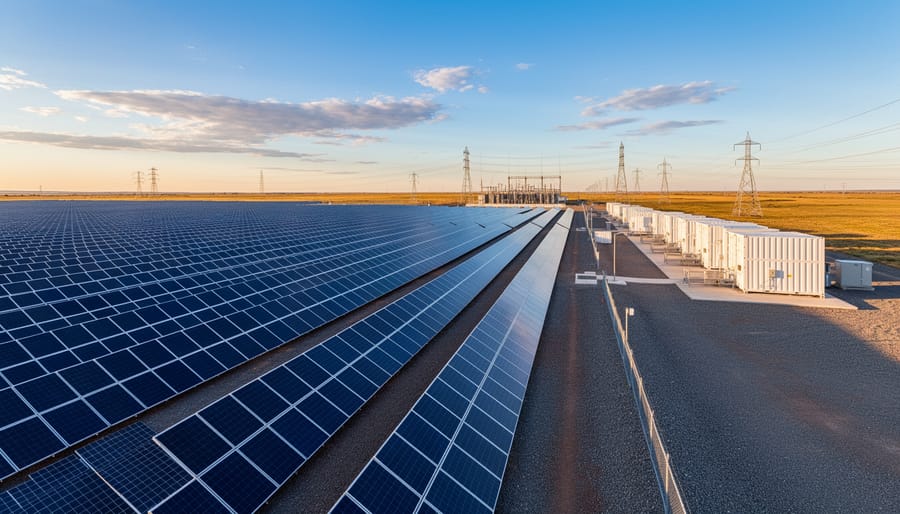
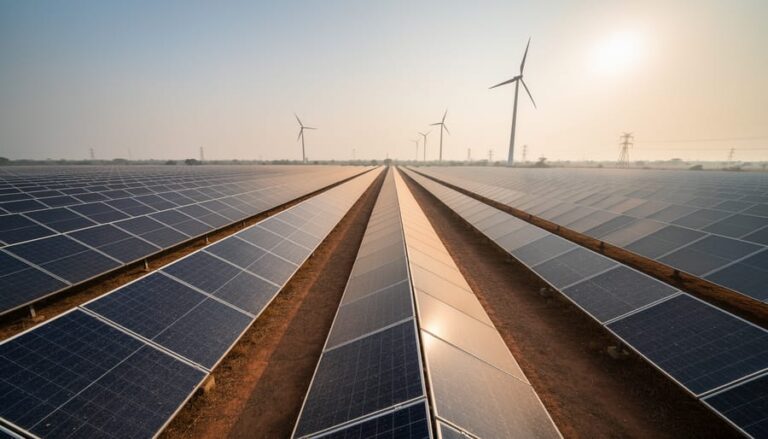
Utility-scale solar dominated new power capacity additions in 2025, commissioning 27 GW of alternating current capacity and driving renewables to a 61% share of all new generating assets. This leadership position reflects more than just volume growth. A fundamental shift has occurred in how these projects are structured: developers increasingly configure new solar installations as power hybrids from the outset rather than deploying standalone photovoltaic arrays.
The hybrid integration trend represents a strategic evolution in project design. Where solar farms once fed directly into transmission systems, many now incorporate co-located battery storage that charges from excess daytime generation and dispatches during evening peak demand hours. This configuration transforms solar from a variable daytime resource into a dispatchable asset that can provide power when grid needs and prices peak.
The operational advantages are compelling. Hybrid systems leverage shared infrastructure, one interconnection point, one substation, consolidated land use, and unified permitting, reducing both capital costs and development timelines. Battery storage paired with solar can capture production that would otherwise be curtailed during periods of grid congestion, converting lost electrons into stored revenue. The systems also provide ancillary grid services like frequency regulation and voltage support, creating additional revenue streams beyond energy sales.
Economic incentives have accelerated adoption. Shared interconnection costs alone can reduce total project expenses by 15-30% compared to separate standalone facilities. Hybrids qualify for both generation and storage incentives in many markets, stacking value propositions. Developer financing has improved as lenders recognize that hybrids deliver more predictable cash flows through diversified revenue and capacity payments.
This integration complements the broader green energy records being set across renewable sectors. While wind turbine failures have prompted some developers to reconsider technology choices, solar-plus-storage hybrids have demonstrated reliability advantages that strengthen project bankability and long-term performance expectations.
2. Wind Hybrids Emerged in Interconnection Queues
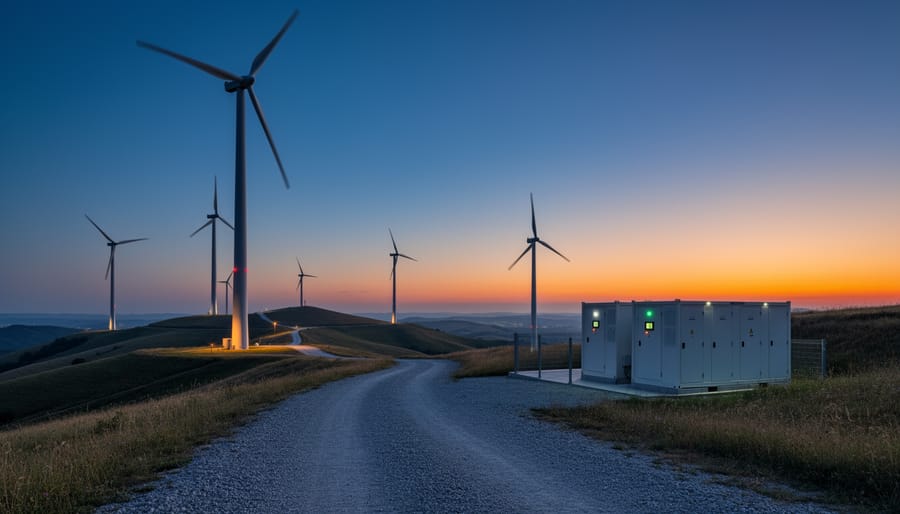
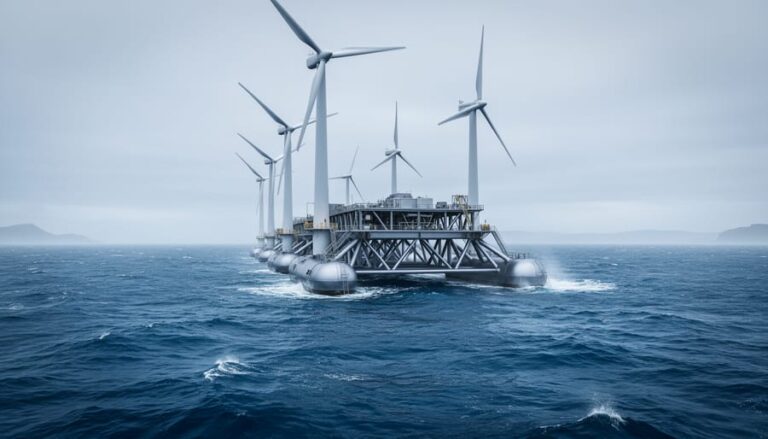
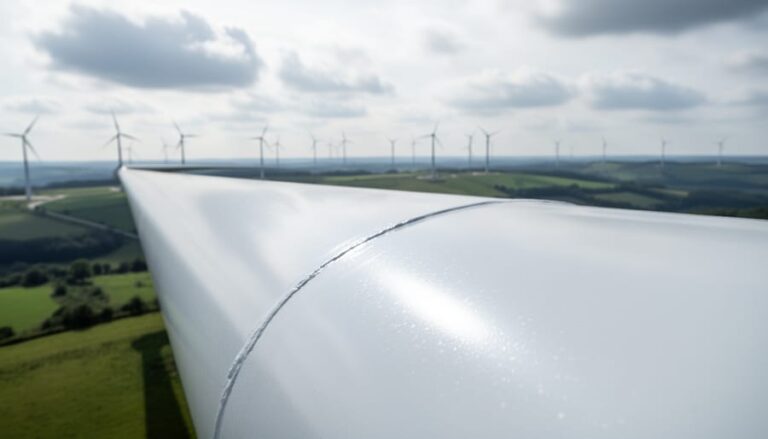
Wind hybrids represent a smaller but strategically significant portion of the interconnection queue pipeline. Of the 225 GW of wind capacity sitting in interconnection queues, 11 GW was proposed as hybrid projects, approximately 5% of total queued wind capacity. This percentage might appear modest compared to solar’s hybrid adoption rates, but it marks a meaningful shift in how wind developers are thinking about project design and revenue optimization.
The proposed wind hybrids most often pair wind generation with battery storage, creating systems that can capture wind energy during off-peak hours and dispatch it when grid demand and prices are higher. This configuration addresses one of wind’s fundamental challenges: wind resources frequently peak at night or during shoulder hours when electricity demand and prices are lower, creating a mismatch between generation and value.
The 5% hybrid penetration rate for wind becomes more significant when you consider wind’s operational differences from solar. Wind turbines generate at varying levels throughout the day and night, making storage integration more complex than with solar’s predictable daily generation curve. Wind projects also typically have higher capacity factors than solar, meaning they generate more hours per day, which changes the storage sizing and dispatch economics compared to solar-plus-storage hybrids.
What makes this 5% figure noteworthy is that it represents early-stage adoption during a period when hybrid economics, interconnection processes, and financing structures are still being optimized for wind. Developers proposing wind hybrids are betting that storage can unlock additional revenue streams, such as capacity payments, ancillary services, and energy arbitrage, that justify the added system complexity and capital cost. As battery costs continue declining and grid operators refine market rules for hybrid dispatch, this 5% baseline suggests room for substantial growth in wind hybrid configurations through 2027 and beyond.
3. Battery Storage Pipeline Expanded Dramatically in Key Markets
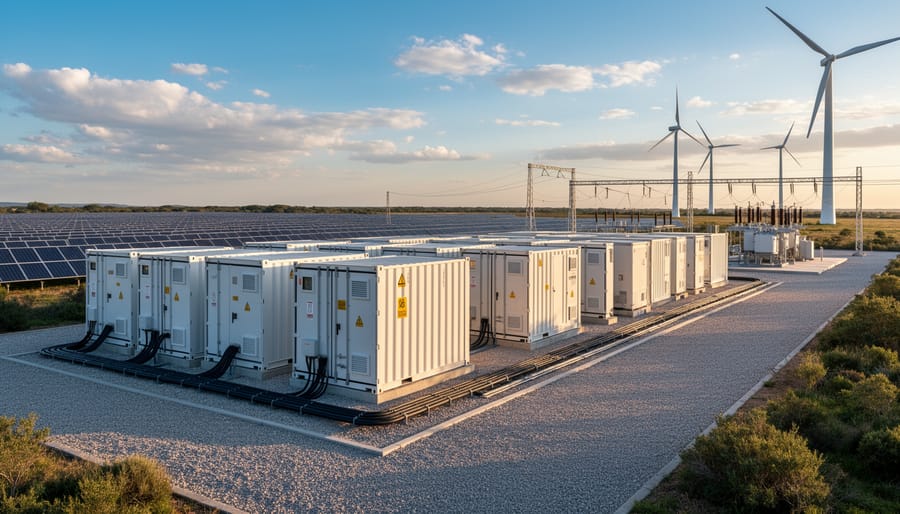
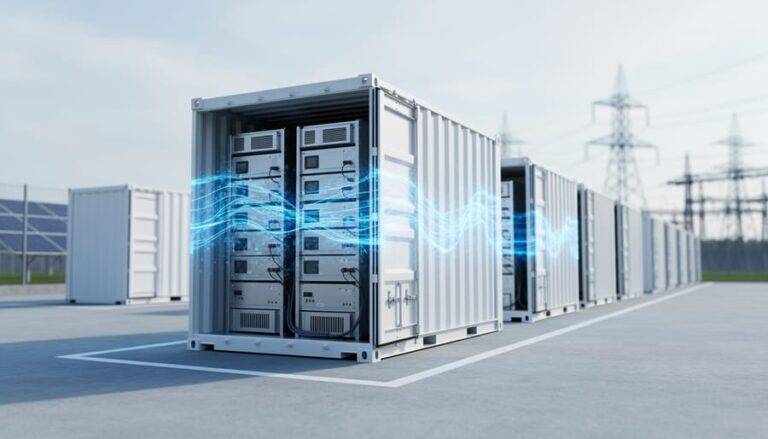
California’s grid operator CAISO hosts one of the world’s most ambitious battery storage buildouts, with 400 projects in development as of October 2026 totaling 119,441 MW of planned capacity. That’s roughly equivalent to 120 gigawatts, enough storage to reshape how the entire Western grid operates and a clear signal that the infrastructure foundation for power hybrids is being laid at scale.
This storage pipeline matters for hybrids because batteries don’t just complement renewable generation; they make hybrid projects economically and operationally viable. Developers building new solar or wind farms in CAISO’s territory now face a market increasingly designed around storage-backed flexibility rather than intermittent-only resources. When 119 GW of battery capacity is either under construction or permitted, the question shifts from “should we add storage?” to “which configuration maximizes project value?”
The concentration in CAISO also demonstrates how storage-rich markets become hybrid-ready markets. Grid operators managing high renewable penetration need dispatchable capacity that can absorb midday solar surges and discharge during evening peaks. Storage projects in the development pipeline create natural partnership opportunities for solar and wind developers: shared interconnection costs, coordinated permitting timelines, and combined offtake agreements that appeal to utilities seeking firm capacity rather than energy-only contracts.
Markets with substantial storage pipelines develop institutional knowledge faster. Interconnection engineers, financing teams, and regulatory staff learn hybrid project structures, grid operators refine dispatch protocols, and utilities gain confidence in how hybrids perform across seasons. CAISO’s 400 projects represent not just megawatts but market experience that will influence hybrid deployment nationwide. When storage infrastructure reaches this scale, the economics tilt decisively toward integrated systems over standalone renewable plants competing for the same grid access.
Why It Matters: The Strategic Value of Power Hybrids
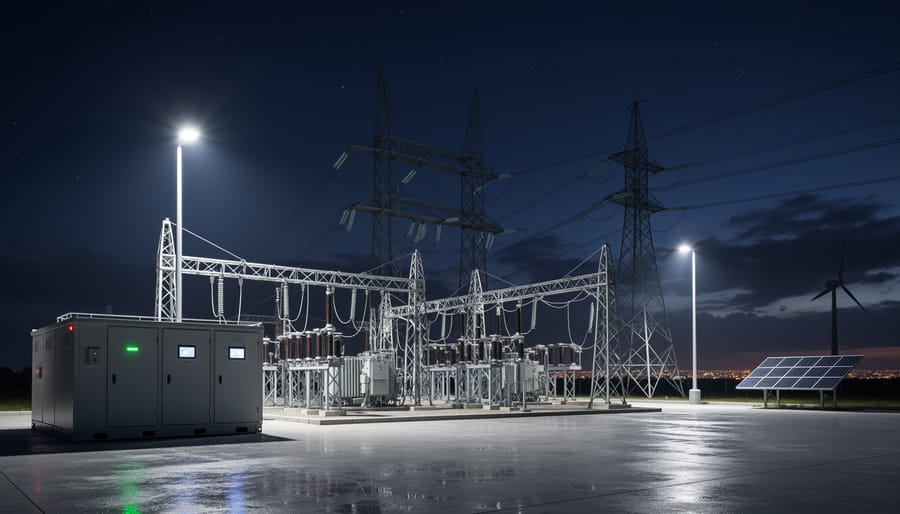
The strategic value of power hybrids extends well beyond their operational design, they represent a fundamental restructuring of how renewable energy integrates into modern grids. Where standalone solar or wind projects generate power intermittently and hope for favorable market timing, hybrid systems actively manage both generation and storage to deliver energy when the grid needs it most. This shift from passive generation to active dispatch transforms renewable projects from weather-dependent resources into dispatchable, reliable capacity that grid operators can actually plan around.
The economic case for hybrids starts with infrastructure efficiency. When developers co-locate battery storage with wind or solar generation, they share a single interconnection point rather than building separate grid connections. That shared interconnection immediately cuts capital costs while also accelerating project timelines, since developers navigate one permitting process instead of two. The infrastructure savings compound when you factor in shared land use, common operations and maintenance teams, and consolidated power purchase agreements that reduce transaction complexity for both developers and utilities.
Beyond cost reduction, hybrids fundamentally improve project economics through revenue diversification and optimized dispatch:
- Shared interconnection costs reduce upfront capital requirements by 15-25% compared to separate projects
- Improved capacity factors through strategic battery discharge during peak demand periods
- Grid service revenue stacking from energy arbitrage, frequency regulation, and capacity markets
- Reduced curtailment losses by storing excess generation instead of wasting it
- Streamlined permitting and land use approvals for co-located systems
- Enhanced dispatchability that qualifies projects for firm capacity payments
For grid operators, hybrids solve the reliability challenge that has limited renewable penetration in many markets. A 100 MW solar farm paired with 50 MW/200 MWh of battery storage can deliver consistent afternoon peak power even when clouds roll in, effectively functioning as a cleaner peaker plant. This reliability matters enormously as utilities retire fossil generators and need renewable resources that can actually replace, not just supplement, that lost dispatchable capacity.
The technology integration also addresses quality issues in renewable power delivery. Battery systems smooth voltage fluctuations, provide reactive power support, and help regulate frequency, grid services that standalone renewables struggle to deliver consistently. These technical capabilities make hybrids more valuable to transmission operators managing increasingly complex grids.
Utilities and developers are prioritizing hybrid configurations because the economics and operational benefits compound. A hybrid project generates more revenue streams, achieves better capacity utilization, secures more favorable financing terms, and offers grid operators the firm capacity they need to meet reliability standards while decarbonizing.
What to Watch: Power Hybrid Trends for Late 2026 and Beyond
As the power hybrid market matures through late 2026, several indicators will signal whether this shift from standalone to integrated systems becomes permanent or faces headwinds.
Watch interconnection queue dynamics closely. The current 5% hybrid share of the 225 GW wind capacity in queues represents early adoption, but conversion rates matter more than queue positions. Track how many proposed hybrid projects actually commission versus how many revert to standalone configurations when faced with permitting, financing, or interconnection challenges. Projects that successfully navigate from proposal to operation validate the hybrid business model and encourage more developers to follow.
Battery storage commissioning timelines will directly enable or constrain hybrid deployment. The 400 battery storage projects totaling 119,441 MW of planned capacity in CAISO create infrastructure that renewable projects can tap into, but construction schedules determine when that capacity becomes available for pairing. Delays in storage projects cascade into delays for dependent hybrid configurations. Monitor which storage projects break ground and reach commercial operation, as these milestones unlock hybrid opportunities for co-located or nearby renewable generation.
Technology innovation in controls and optimization software will determine how much value hybrids can extract from combined operation. AI battery safety analytics, dispatch algorithms that coordinate generation and storage in real time, and forecasting systems that anticipate market conditions all improve hybrid economics. Developers adopting sophisticated software platforms gain competitive advantages through better asset utilization and revenue capture.
Market rule changes affecting hybrid dispatch and compensation deserve attention. How grid operators and power markets classify and compensate hybrid resources, whether as single units or separate components, directly impacts project revenues. Watch for regulatory decisions that clarify hybrid participation rules, ancillary service eligibility, and capacity credit calculations.
Finally, track developer strategies around greenfield projects versus retrofitting existing assets. Whether developers prioritize building new hybrids from scratch or adding storage to operating renewable plants signals their confidence in hybrid economics and reveals preferred pathways for scaling this model.
Understanding Power Hybrid Configurations
Power hybrids operate through several distinct configuration approaches, each with specific technical and economic trade-offs. The fundamental architecture choice determines how renewable generation and storage components connect to each other and to the grid.
DC-coupled systems link solar panels and batteries on the direct current side before a shared inverter converts power to alternating current. This configuration reduces conversion losses because solar electricity flows directly to batteries without multiple DC-to-AC transformations, making it particularly efficient for solar-storage hybrids. AC-coupled configurations instead connect generation and storage after separate inverters, offering greater operational flexibility since each component can function independently.
The interconnection structure profoundly affects project economics and operations. Shared interconnection points allow hybrids to use a single grid connection for both generation and storage, reducing infrastructure costs and simplifying permitting compared to separate interconnection agreements for each asset. Co-located hybrids place generation and storage at the same physical site, minimizing transmission losses and land requirements. Virtual power plants aggregate geographically distributed assets through software coordination rather than physical proximity, though these face different regulatory treatment than true hybrids.
- DC-coupled
- A configuration where solar panels and batteries connect before power conversion, sharing a single inverter to reduce energy losses.
- AC-coupled
- A setup linking generation and storage after separate inverters, enabling independent operation of each component.
- Co-location
- Placement of renewable generation and storage assets at the same physical site to share infrastructure and reduce costs.
- Interconnection
- The point where a power plant connects to the transmission grid, determining capacity limits and access rights.
- Capacity factor
- The ratio of actual output to maximum possible output over time; hybrids achieve higher capacity factors than standalone renewables.
- Curtailment
- The reduction or cessation of renewable generation when supply exceeds demand; storage in hybrids captures otherwise curtailed power.
Hybrid dispatch optimization represents the most complex operational dimension. Advanced control systems determine moment-by-moment whether to generate, store, or discharge based on real-time electricity prices, grid conditions, and contractual obligations. These systems increasingly incorporate battery safety analytics to balance revenue maximization with equipment longevity and operational safety constraints. The optimization calculates trade-offs between immediate revenue from energy sales versus storing power for higher-value periods, factoring in battery degradation costs and cycling limits.
Frequently Asked Questions About Power Hybrids
What makes a power plant a ‘hybrid’?
A hybrid power plant integrates two or more energy technologies at a single site, most commonly combining wind or solar generation with battery storage. These systems share infrastructure like transmission interconnection points and operate as a coordinated unit rather than separate facilities.
Why are hybrids becoming more common than standalone projects?
Hybrids solve the intermittency challenge of renewables while reducing development costs through shared interconnection and infrastructure. With renewables accounting for 61% of new power-generating capacity through 2025 and battery storage pipelines expanding dramatically, developers can now build integrated systems that deliver power when the grid needs it most, not just when the sun shines or wind blows.
How do hybrids improve grid reliability?
Battery storage in hybrid systems can dispatch stored renewable energy during peak demand periods, smooth output fluctuations, and provide essential grid services like frequency regulation. This dispatchability transforms variable renewable generation into a more reliable, controllable resource that grid operators can count on.
What are the economic advantages for developers?
Hybrids reduce capital costs by sharing interconnection infrastructure, land, and permitting expenses between generation and storage. They also capture higher revenue by selling power during premium-priced peak hours rather than low-value midday periods when solar floods the grid.
Can existing renewable projects be retrofitted as hybrids?
Yes, many operational wind and solar facilities can add battery storage to become hybrids, especially if they have available interconnection capacity. Retrofits avoid some permitting hurdles and leverage existing infrastructure, though they may face technical constraints compared to purpose-built hybrid designs.
How do hybrids affect electricity prices?
Hybrids can moderate price volatility by storing low-cost renewable generation and releasing it during high-price periods, which dampens extreme peak pricing. Over time, as hybrids replace more expensive peaking plants, they should contribute to lower average wholesale electricity costs while maintaining grid stability.
These questions reflect the core concerns of both industry professionals evaluating hybrid projects and energy enthusiasts trying to understand why power hybrids represent such a significant shift. The answers draw on the fundamental operational and economic logic driving the trend documented through 2025 and into 2026, when approximately 5% of the 225 GW of wind capacity in interconnection queues was already proposed as hybrid projects and CAISO alone had 400 battery storage projects totaling 119,441 MW in development.
The data from 2025 and early 2026 makes one thing clear: power hybrids have shifted from experimental configurations to the dominant architecture for utility-scale renewable deployment. When 27 GW of new solar capacity leads a year in which renewables captured 61% of all new generating capacity, and when even conservative wind development shows 11 GW proposed as hybrids in interconnection queues, the trend becomes undeniable. The presence of 400 battery storage projects totaling 119,441 MW in development within a single market like CAISO demonstrates that the infrastructure foundation for widespread hybrid deployment is already being built.
This isn’t simply about adding batteries to solar farms or pairing storage with turbines. The hybrid power plants trend represents a fundamental rethinking of how renewable capacity is designed, financed, and operated. Developers now optimize for grid services and revenue stacking rather than pure generation output. Utilities evaluate projects based on dispatchability and reliability contributions, not just nameplate capacity. Financial models account for shared interconnection costs and combined value streams that standalone projects can’t access.
For industry stakeholders, understanding hybrid economics and operations has become essential rather than optional. The projects being commissioned today and queued for 2027 and beyond will define grid capabilities for decades. Those who grasp how DC coupling improves round-trip efficiency, how hybrid dispatch algorithms maximize revenue, and how storage duration affects project economics will shape the next phase of the energy transition. The hybrid era has arrived.