Yes, India is not just investing in renewable energy, it has delivered one of the most ambitious clean energy buildouts in global history. As of July 31, 2026, the country surpassed 300 GW of non-fossil fuel-based installed electricity generation capacity, marking a pivotal moment in its transition away from coal and oil. This milestone represents more than incremental progress. It signals that India, the world’s third-largest energy consumer, has fundamentally reoriented its power sector toward wind, solar, hydropower, and emerging technologies at a speed few analysts predicted even five years ago.
The achievement arrives ahead of the country’s 500 GW target for 2030, reinforcing that India’s renewable trajectory is not aspirational rhetoric but a measurable reality backed by policy frameworks, capital deployment, and grid-scale infrastructure. For professionals in the renewable energy sector, this milestone offers concrete evidence of sustained investment momentum, diversified financing mechanisms, and regulatory commitment at both central and state levels. It also underscores a strategic shift in how developing economies can scale clean capacity without sacrificing energy security or economic growth, providing a case study with global implications for climate action and energy transition planning.
What Changed: India Crosses the 300 GW Threshold
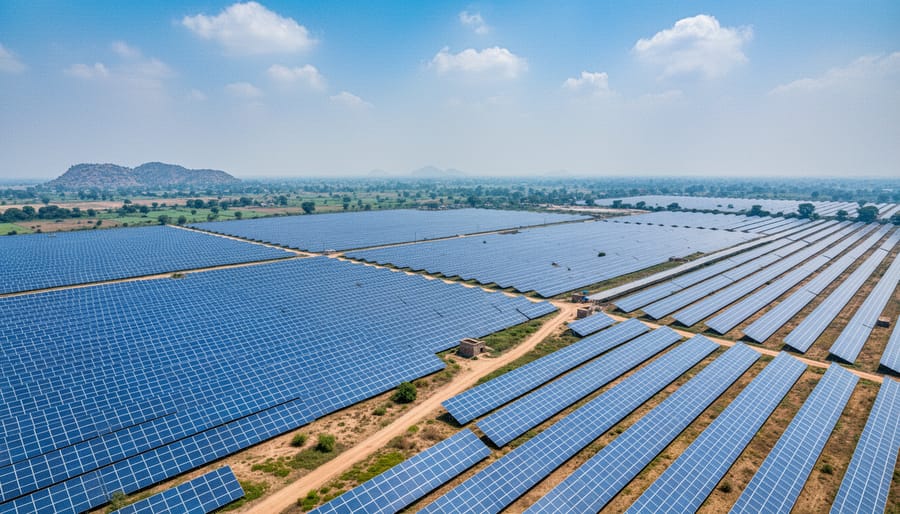
On July 31, 2026, India achieved a landmark figure that reshaped its energy narrative: the country’s 300 GW non-fossil milestone in installed electricity generation capacity. This means India now generates power from 300.50 GW of clean energy sources, a volume that places the nation among the world’s top three renewable energy producers. The figure represents actual installed capacity, the maximum output these facilities can produce under optimal conditions, across a diverse portfolio of technologies.
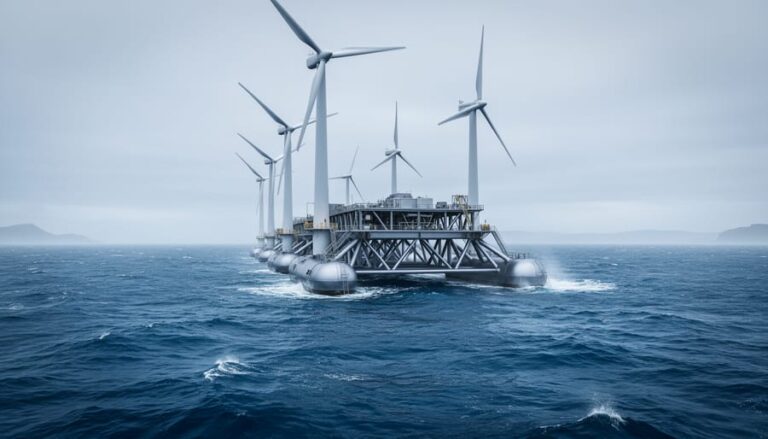
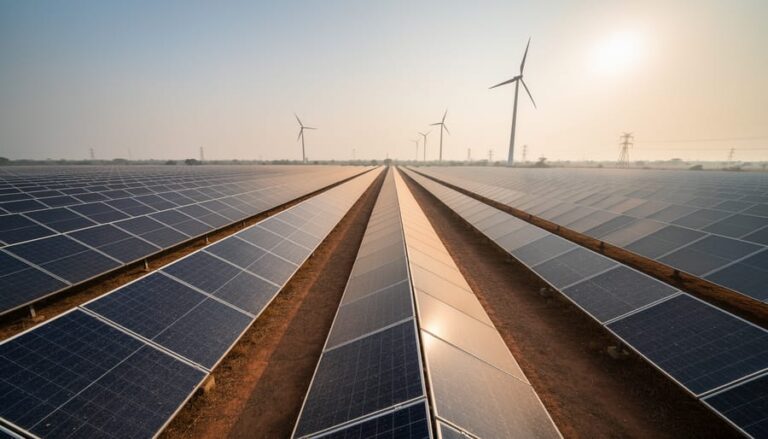
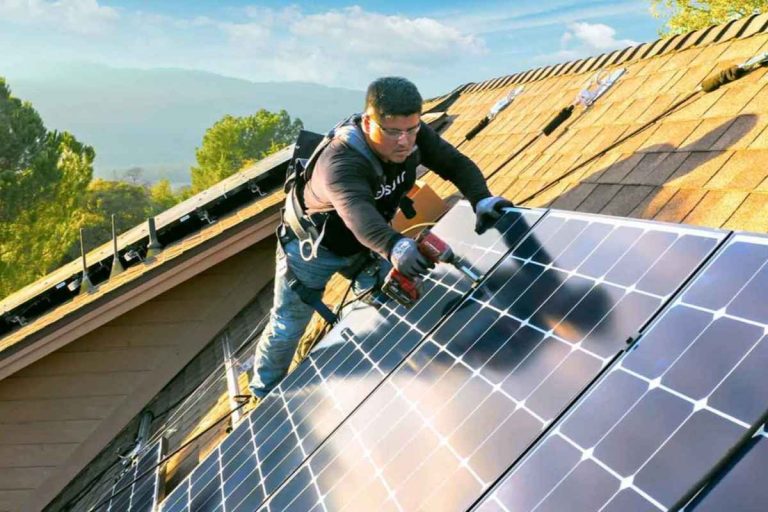
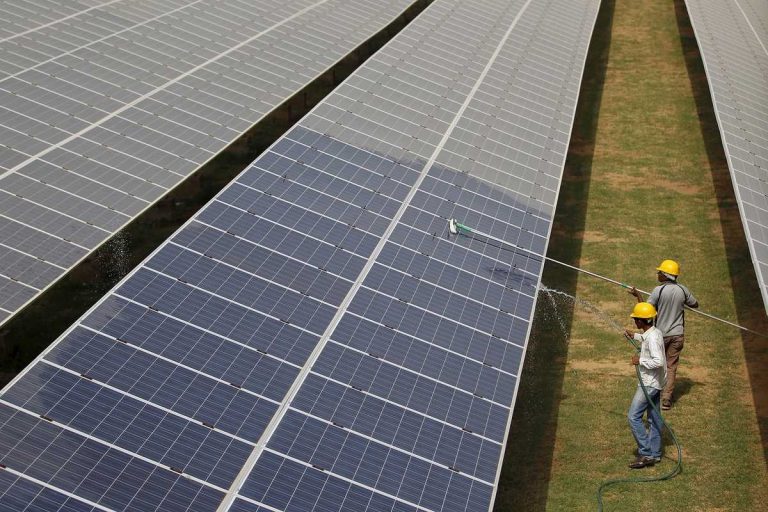
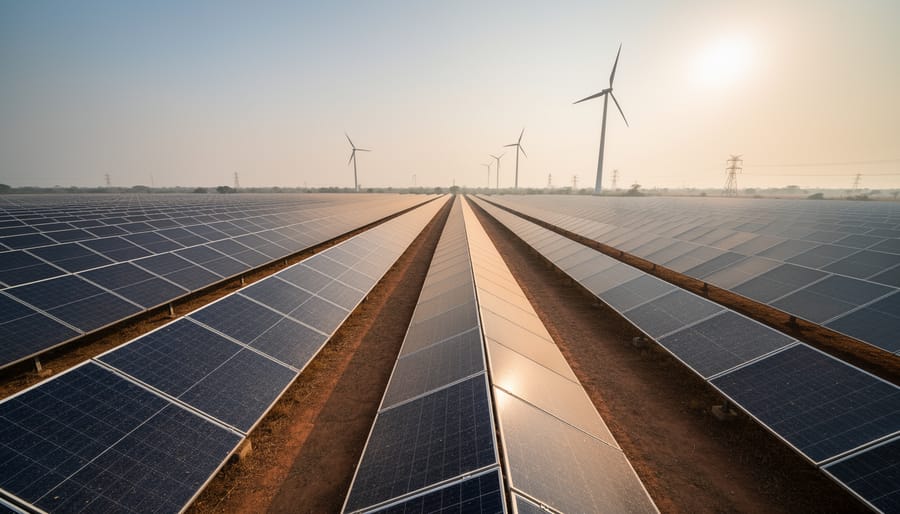
What exactly makes up this capacity? The non-fossil includes solar, wind, hydro, biomass, and nuclear energy installations spread across the country. Solar photovoltaic farms and rooftop systems contribute the largest share, followed by wind turbines in states with strong wind corridors, hydroelectric projects both large and small, and biomass plants converting agricultural waste into electricity. Together, these technologies form an energy infrastructure that can displace coal-fired generation and reduce carbon emissions at scale.
The global context matters. With 300.50 GW, India trails only China and the United States in total renewable capacity, but leads most major economies in the pace of recent additions. This positioning signals to international investors, climate negotiators, and equipment manufacturers that India’s renewable sector has moved from ambition to execution. The milestone validates the country’s trajectory: starting from 135 GW in December 2023, crossing an expected 170 GW by March 2025, and now reaching 300.50 GW, a pace that few analysts predicted even two years ago.
Key Developments Behind the Milestone
1. Accelerated Capacity Additions from 2023 to 2026
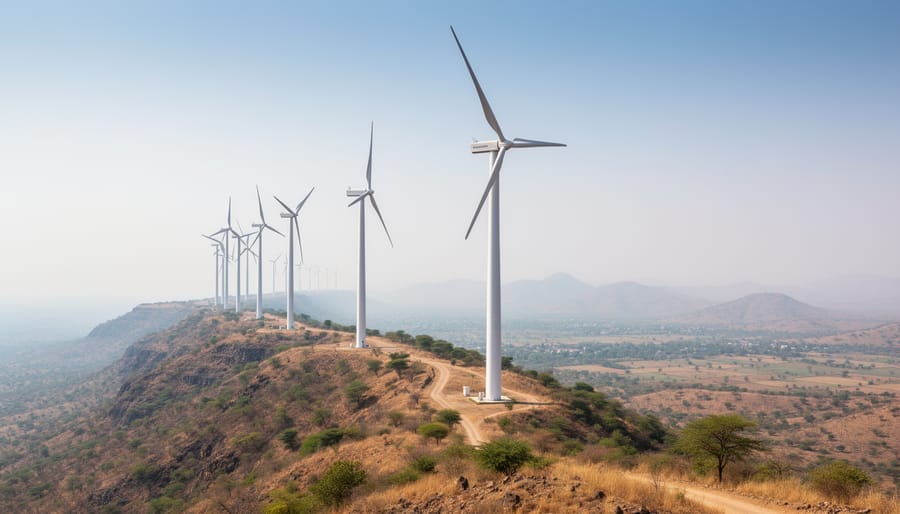
India’s renewable energy expansion accelerated dramatically between late 2023 and mid-2026, adding over 165 GW of clean capacity in less than three years. In December 2023, the country’s non-fossil fuel base stood at 135 GW. By March 2025, that figure surged as capacity rose to about 170 GW representing a 26% increase in just fifteen months. The momentum continued through the first half of 2026, when India crossed the psychologically significant 300 GW mark on July 31, reaching 300.50 GW total non-fossil capacity.
Solar installations drove the bulk of this growth, accounting for roughly 60% of new additions. The technology’s declining costs, coupled with streamlined permitting processes for utility-scale projects, enabled developers to commission large solar parks at an unprecedented pace. Wind energy contributed approximately 25% of the additions, while small hydro, biomass, and emerging technologies filled the remainder.
This 76% jump in capacity over thirty-one months demonstrates sustained installation rates averaging 5.3 GW per month, a feat achieved through coordinated planning between central and state authorities, improved grid readiness, and lessons learned from successful solar projects that reduced commissioning timelines. The consistency of these additions, rather than sporadic bursts, signals that India has built institutional capacity to maintain high deployment velocities.
2. Policy Frameworks and Government Initiatives
India’s surge past 300 GW owes much to a coordinated policy architecture that aligned incentives, streamlined approvals, and mobilized capital at scale. The government deployed production-linked incentive schemes targeting solar module manufacturing and battery storage, channeling domestic production capacity from negligible levels in 2020 to multi-gigawatt facilities by 2025. These incentives reduced import dependence and created a supply chain capable of supporting the aggressive installation targets.
Renewable purchase obligations, mandates requiring distribution companies to source a minimum percentage of power from clean sources, forced the market to absorb capacity as it came online. States raised their RPO targets incrementally, creating predictable demand that project developers could finance against. Penalties for non-compliance tightened, turning what had been a soft guideline into a binding commitment that directly translated into contracted capacity.
Land acquisition reforms simplified leasing processes for solar parks and wind farms, particularly in states like Rajasthan, Gujarat, and Karnataka. Single-window clearance mechanisms cut approval timelines from years to months, removing a longstanding bottleneck that had stalled projects even after financing closed. Grid infrastructure investments followed in parallel: new transmission corridors connected remote renewable zones to demand centers, and ancillary services markets began compensating for intermittency.
These policies created an environment where capital flowed freely, projects cleared regulatory hurdles quickly, and offtake certainty existed from day one. The 165 GW added between late 2023 and mid-2026 reflects this machinery operating at full capacity, turning policy intention into installed megawatts.
3. Private Sector Investment and International Partnerships
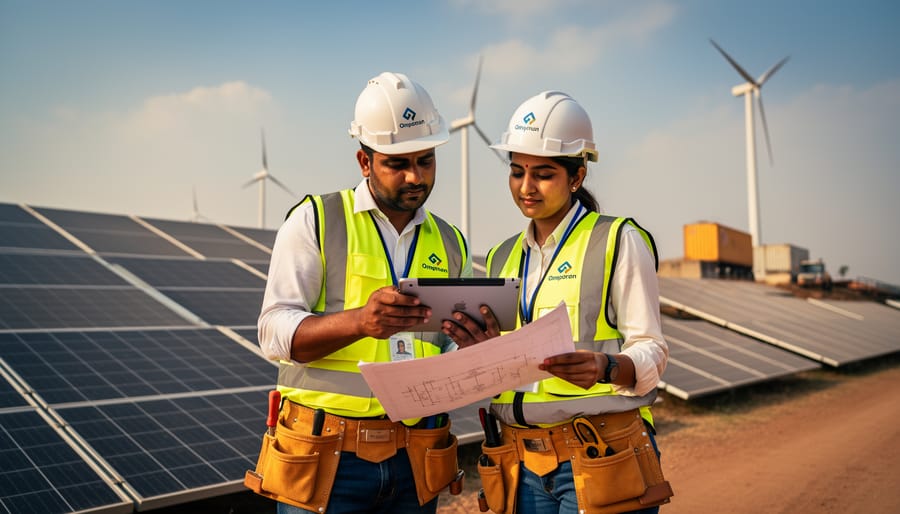
The 300 GW milestone reflects a fundamental shift in capital allocation toward India’s renewable sector, driven by both domestic conglomerates and global energy giants seeking exposure to one of the world’s fastest-growing clean energy markets. Private investment has surged across the entire value chain, from utility-scale solar and wind farms to component manufacturing and grid infrastructure, transforming India from a policy-dependent market into an investment-grade opportunity.
Domestic business houses like Adani Green Energy, ReNew Power, and Tata Power have deployed billions of dollars in greenfield projects, while international players including TotalEnergies, ACWA Power, and Copenhagen Infrastructure Partners have entered through joint ventures and strategic acquisitions. These partnerships blend local execution capabilities with international capital and technology, accelerating project timelines and improving asset quality across the sector.
Several investment trends and partnership models have been particularly influential in driving capacity growth:
- Equity infusions into platform companies owning multi-gigawatt portfolios, providing patient capital for long-term asset development
- Manufacturing joint ventures between Indian firms and international equipment suppliers to localize solar module and turbine production
- Green bonds and sustainability-linked financing instruments that lowered the cost of capital for renewable projects
- Corporate power purchase agreements enabling technology companies and industrials to directly fund new renewable capacity
- Sovereign wealth fund participation in large-scale hybrid solar-wind projects offering stable, long-duration returns
This ecosystem maturation has been reinforced by production-linked incentive schemes that attracted over $20 billion in manufacturing commitments, creating a vertically integrated supply chain within India. The shift from project-level financing to platform investments signals investor confidence in the sector’s long-term trajectory, with capital now flowing toward the 500 GW target as a credible investment thesis rather than an aspirational goal.
Why This Milestone Matters
The 300 GW milestone represents far more than a numerical achievement, it signals India’s credible pivot toward energy independence and climate leadership. With non-fossil fuel capacity now exceeding 300 GW, India has substantially reduced its vulnerability to volatile global fossil fuel markets while building a foundation for long-term energy security. This capacity diversification means fewer supply disruptions, price shocks, and geopolitical dependencies that have historically constrained India’s economic planning.
For climate commitments, this achievement demonstrates tangible progress toward India’s Nationally Determined Contributions under the Paris Agreement. The country pledged to achieve 50% cumulative electric power installed capacity from non-fossil fuel sources by 2030, and the current milestone puts that target within realistic reach. Each gigawatt of renewable capacity directly displaces potential coal-fired generation, flattening India’s emissions trajectory without compromising the energy access needed for economic growth.
The economic implications extend beyond energy metrics. India’s renewable sector has become a major employment engine, creating jobs across manufacturing, installation, operations, and maintenance. Solar panel manufacturing, wind turbine assembly, and grid infrastructure development have spawned new industrial ecosystems, particularly in states like Gujarat, Tamil Nadu, and Rajasthan. This job creation occurs domestically rather than enriching foreign coal exporters, keeping wealth within India’s economy.
Internationally, crossing 300 GW elevates India’s credibility in climate negotiations and clean energy forums. Countries and investors now view India as a serious renewable market, not just an aspirational one, driving increased foreign direct investment and technology partnerships that further accelerate the transition.
What to Watch: India’s Path to 500 GW by 2030
Reaching 500 GW by 2030 demands India sustain installations averaging 50 GW annually through the end of the decade. That pace is achievable but requires simultaneous progress across manufacturing, grid infrastructure, and financing channels.
Manufacturing capacity must keep up with demand. India’s domestic solar module production is expanding rapidly under production-linked incentive schemes, yet supply chain vulnerabilities remain for critical components like inverters and tracking systems. Achieving local manufacturing scale for wind turbine quality components will determine whether developers can maintain installation momentum without relying heavily on imports.
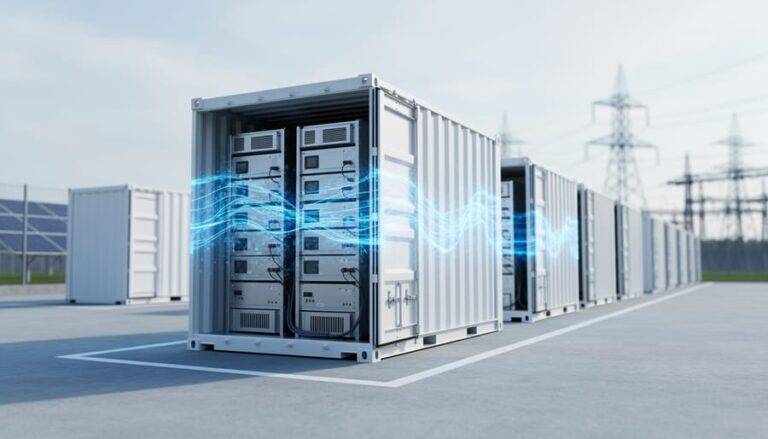
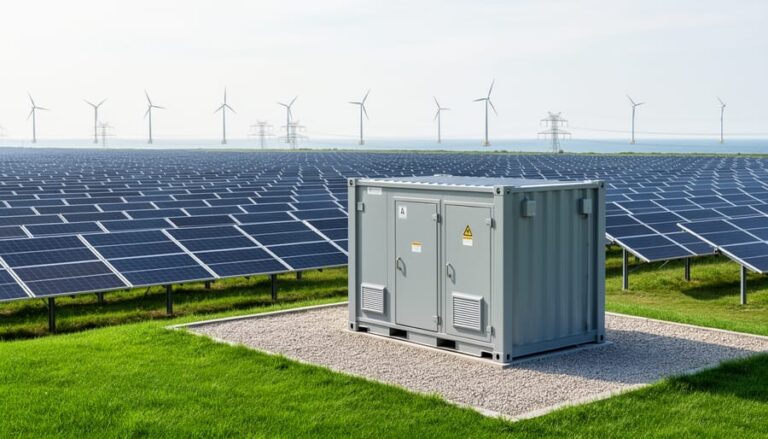
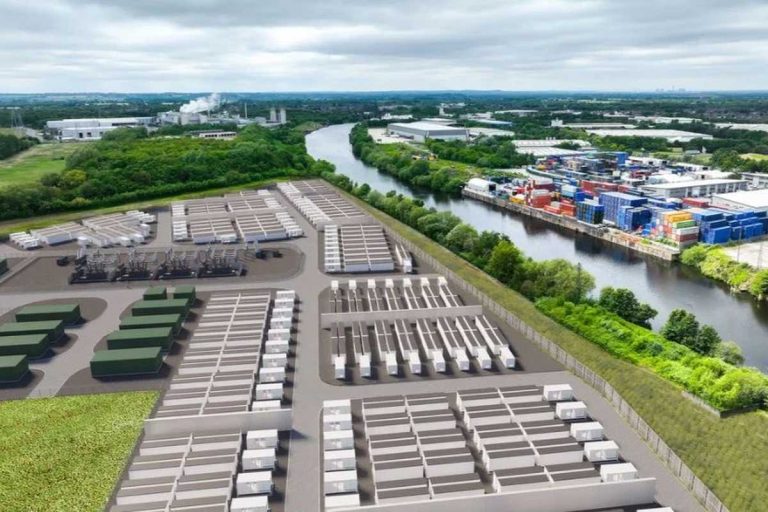
Grid integration presents the most immediate technical hurdle. Absorbing 200 GW of additional variable renewable capacity requires massive investments in transmission corridors, grid-scale batteries and forecasting systems. The government has approved green energy corridors, but execution timelines and coordination between central and state transmission utilities will make or break the 2030 target. Expect delays if inter-state transmission projects drag beyond 2027.
Financing needs escalate sharply. Reaching 500 GW requires roughly $200 billion in capital deployment over four years. While concessional international finance and domestic banks have supported growth so far, sustaining that flow hinges on maintaining investor confidence through policy stability, timely payment mechanisms for power purchase agreements, and streamlined land acquisition processes.
Watch these milestones: annual capacity additions crossing 50 GW consistently by 2027, at least 30 GW of storage capacity announced by 2028, and the share of hybrid power plants increasing to improve grid reliability. If these markers hit, 500 GW becomes not just feasible but probable.
Frequently Asked Questions
What counts as non-fossil fuel capacity in India’s 300 GW milestone?
Non-fossil fuel capacity includes all renewable energy sources such as solar, wind, hydropower, and biomass, as well as nuclear power. The 300.50 GW figure achieved by July 31, 2026, represents installed electricity generation capacity from these sources combined.
How does India’s renewable capacity compare globally?
India ranks among the top countries worldwide for renewable energy installations. The 300 GW milestone positions India as a major player in the global energy transition, though direct comparisons require considering total energy demand and per-capita consumption alongside absolute capacity figures.
Which sectors will drive growth toward the 500 GW target?
Solar and wind energy are expected to lead capacity additions through 2030, supported by manufacturing incentives and improved grid infrastructure. Hydropower and emerging technologies like green hydrogen will play supporting roles as India diversifies its renewable portfolio.
What does this mean for energy consumers and businesses?
Growing renewable capacity should contribute to more stable electricity prices over time and reduced dependence on imported fossil fuels. Businesses can expect expanding opportunities in renewable energy procurement, while consumers may see gradual improvements in grid reliability as clean energy sources mature.
The 300 GW milestone answers a fundamental question about India’s renewable commitment with concrete evidence. The trajectory from 135 GW in December 2023 to the current capacity demonstrates sustained momentum rather than isolated progress. For stakeholders evaluating India’s energy future, the consistent capacity additions and the clear path toward 500 GW by 2030 provide measurable benchmarks. Policy continuity, investment flows, and technological adoption will determine whether India maintains this pace through the decade’s end.
India’s achievement of 300.50 GW in non-fossil fuel capacity stands as compelling evidence that the country is not merely investing in renewable energy, it’s executing one of the world’s most ambitious clean energy transitions at scale. This milestone, reached in July 2026, validates the effectiveness of coordinated policy frameworks, sustained private investment, and accelerating deployment momentum across solar, wind, and hydro sectors.
The path to 500 GW by 2030 remains demanding, requiring an average of 50 GW in annual additions alongside substantial grid modernization and manufacturing expansion. Success depends on maintaining policy certainty, unlocking continued financing, and fostering innovation in storage and transmission technologies. Yet India has demonstrated both the institutional capacity and market appetite to sustain this trajectory.
As the global energy landscape shifts toward decarbonization, India’s 300 GW achievement positions the nation as a renewable energy leader whose decisions will shape international climate outcomes. The momentum built over the past three years suggests that India’s clean energy story is just beginning.