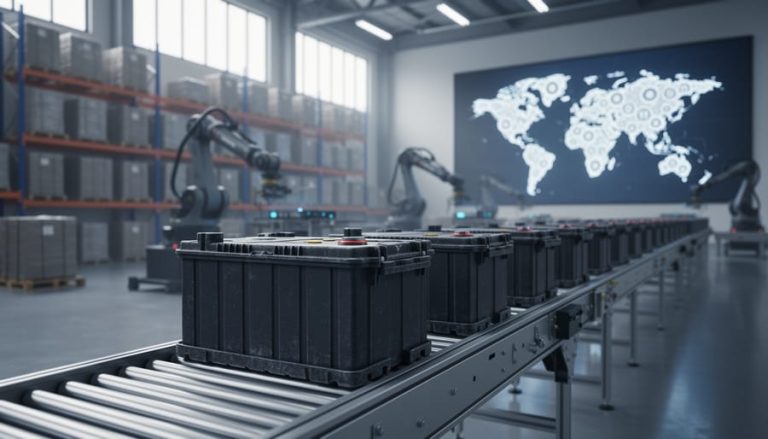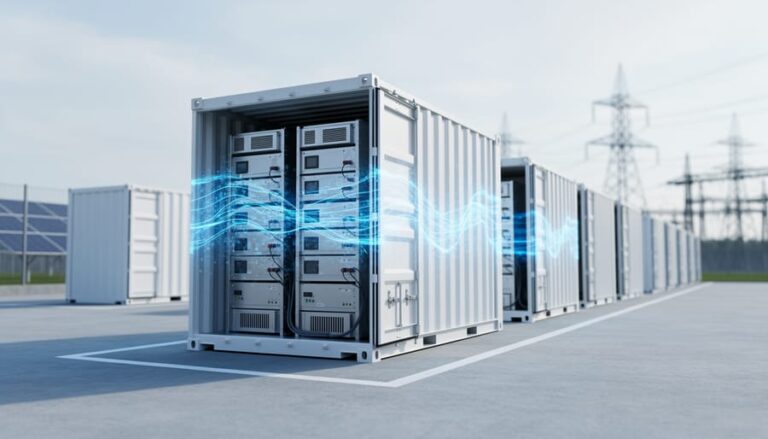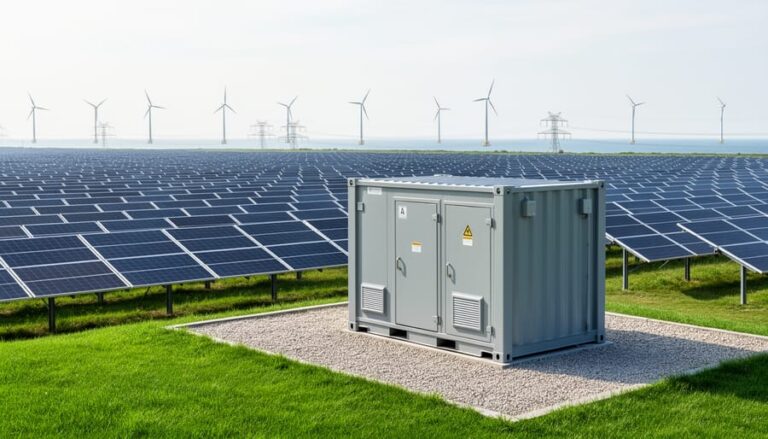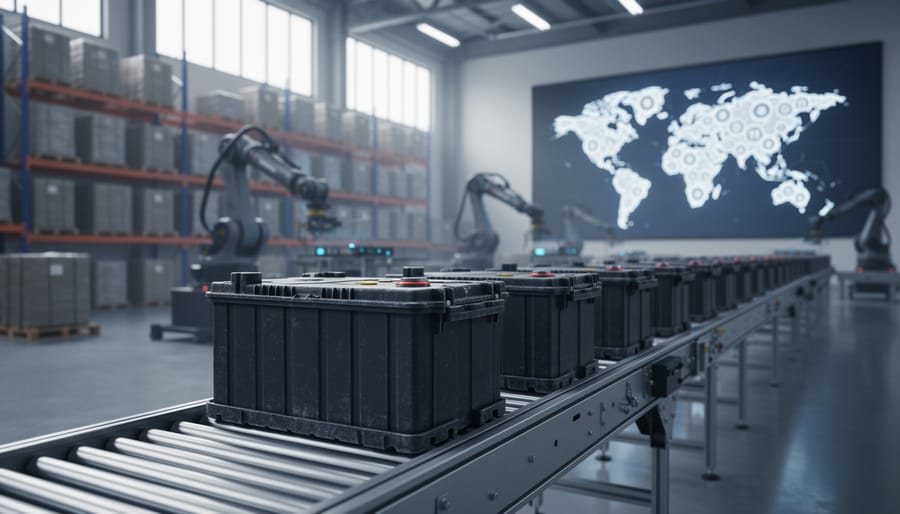
Assessing and mitigating clean energy supply chain risks requires understanding your exposure to concentration points in battery materials, then implementing a systematic diversification strategy across procurement, regional partnerships, and verification protocols. The International Energy Agency’s February 2026 analysis revealed that China controls 80% of global battery supply chains, with near-monopoly shares of 95% or above in segments like precursor cathode materials and LFP cathode materials. This concentration creates multiple vulnerability points that became starkly visible when China announced export controls on lithium-ion batteries, effective November 8, 2026. The controls threaten to tighten international supplies if export approvals face delays.
For renewable energy professionals managing solar-plus-storage projects, electric vehicle fleets, or grid-scale battery deployments, these risks are no longer theoretical. A single regulatory shift in one country can cascade through your entire project timeline and budget. The IEA Ministerial Declaration adopted February 19, 2026, recognized critical minerals as strategically important, but recognition alone doesn’t secure your supply chain.
This guide transforms the IEA’s analytical findings into a practical framework. You’ll learn to map your specific dependencies, quantify exposure to concentration risk, identify alternative suppliers in emerging production regions, and build verification systems that confirm your supply chain resilience. Whether you’re sourcing battery cells for a 50 MW storage installation or evaluating vendor proposals for fleet electrification, the steps ahead provide concrete methods to reduce vulnerability while maintaining project economics.
Understanding the Critical Materials and Concentration Points
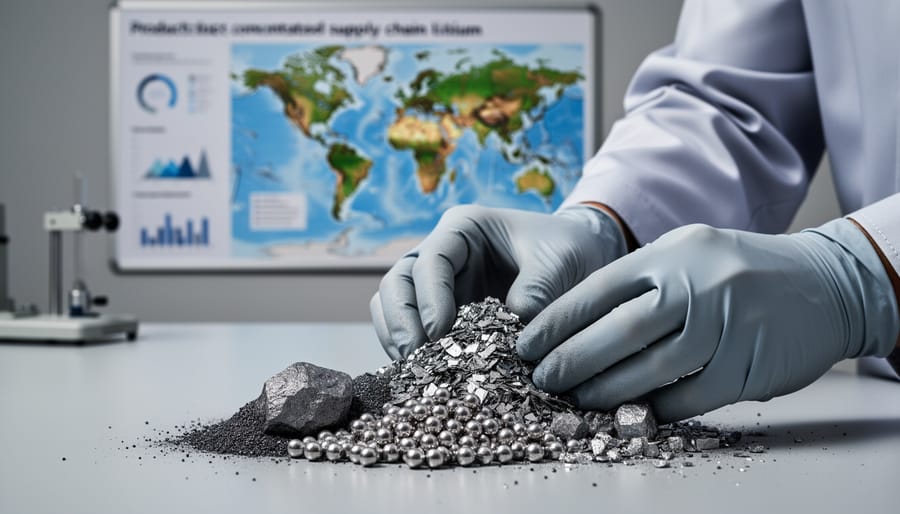
The clean energy transition depends on a surprisingly narrow set of materials concentrated in a single country. Lithium, cobalt, nickel, and graphite form the backbone of modern battery technology, but the real vulnerability lies not in extracting these minerals, it’s in processing them into battery-ready components. China dominates midstream and downstream supply chains for batteries globally, controlling 80% of key processing stages that transform raw materials into functional battery components.
To understand this concentration, you need to grasp three distinct supply chain segments. Upstream involves mining raw materials from the ground. Midstream encompasses refining and processing these materials into chemical compounds suitable for manufacturing. Downstream refers to producing finished battery components, cathodes, anodes, electrolytes, and assembling complete battery cells. While many countries mine lithium or cobalt, China has methodically built capacity across the more valuable midstream and downstream stages.
The concentration becomes extreme in specific segments. For precursor cathode materials, the chemical compounds that determine battery performance, China maintains a near monopoly with shares of 95% or above. The same holds true for lithium iron phosphate (LFP) cathode materials, increasingly popular in electric vehicles and stationary storage due to lower costs and improved safety. These aren’t just high market shares; they represent single points of failure where alternative suppliers barely exist at commercial scale.
This exceptional concentration creates multiple vulnerability points across the supply chain. A disruption in Chinese precursor cathode production doesn’t just affect one product line, it ripples through electric vehicles, grid storage, consumer electronics, and power tools simultaneously. Geographic concentration also means geopolitical tensions, natural disasters, or regulatory changes in one region can throttle global clean energy deployment. The IEA’s February 2026 analysis highlighted that export controls, like those China introduced on lithium-ion batteries effective November 8, 2026, could create immediate supply tightness in international markets if export approvals face delays.
The risk extends beyond materials availability to technological lock-in. When 95% of a critical component comes from one source, global battery chemistry standards, manufacturing processes, and even vehicle designs optimize around that supplier’s specifications. Diversifying later means not just finding new suppliers but potentially redesigning products.
Identifying Export Restrictions and Disruption Mechanisms
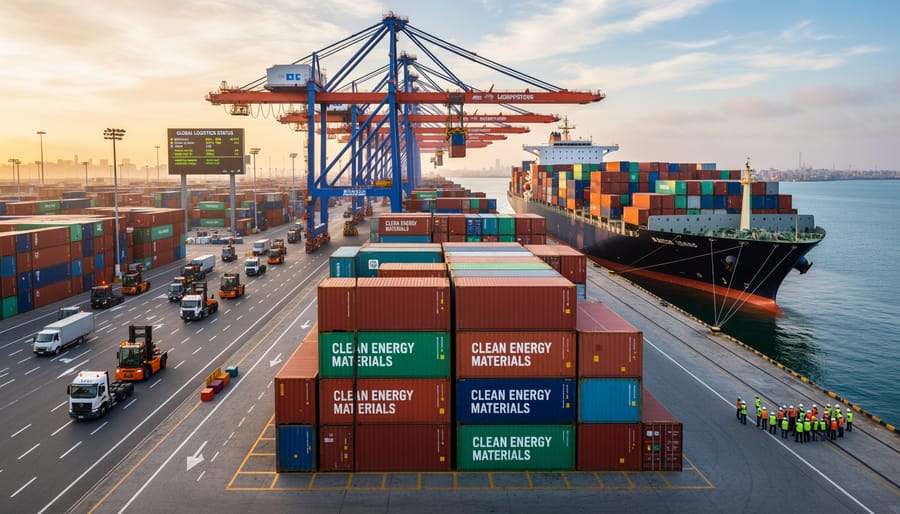
The clean energy transition faces a complex web of supply chain threats, and the IEA flags Nov. 8 controls on lithium-ion batteries as the most immediate risk. China’s export restriction regime, which took effect November 8, 2026, requires companies to obtain government approval before shipping battery materials and finished cells to international markets. The IEA’s February 2026 analysis warned that even administrative delays in the approval process could trigger short-term supply tightness, as buyers worldwide depend on China for 80% of key battery components and over 95% of precursor cathode materials.
Export controls represent just one disruption pathway. Geopolitical tensions between major economies can fracture supply relationships overnight, forcing companies to rebuild sourcing networks under pressure. Natural disasters pose localized but severe threats: a single earthquake, flood, or typhoon can shut down critical processing facilities for weeks or months, and China’s geographic concentration means one regional event can ripple through global supply chains. The Export controls could pressure supplies, but logistics bottlenecks compound the problem during demand surges or port congestion.
Regulatory shifts add another layer of uncertainty. Environmental standards, labor regulations, and mining permit requirements change with little warning, sometimes halting production at major facilities. Trade policy adjustments, tariffs, and sanctions reshape cost structures and viable sourcing routes within months. For organizations managing battery procurement, these mechanisms don’t operate in isolation. A typhoon that damages a Chinese port can delay shipments just as new export approvals slow processing, creating cascading failures that a single-source supply chain cannot absorb. Understanding each disruption type helps you build targeted defenses rather than generic contingency plans.
Assessing Your Organization’s Supply Chain Exposure
Start by mapping every tier-1 supplier in your critical materials chain, the companies directly providing battery components, minerals, or processed materials for your operations. Request from each supplier a complete breakdown of where they source their raw inputs, which countries host their processing facilities, and what percentage of their total capacity serves your organization. This initial mapping reveals whether a supplier represents 5% or 50% of your lithium supply, information essential for quantifying actual exposure.
Calculate your geographic concentration ratio by tallying the percentage of each critical material sourced from a single country. If 78% of your graphite comes from Chinese suppliers or Chinese-sourced material, you face concentration risk approaching the 80% threshold the IEA identifies as creating vulnerability. Organizations typically discover concentration they didn’t realize existed, a “diversified” supplier base that all sources precursor materials from the same region.
- Document all tier-1 suppliers and request country-of-origin data for their raw materials, not just their corporate headquarters location.
- Identify single points of failure by asking which suppliers have no immediate alternatives if disrupted, and which materials have lead times exceeding three months.
- Calculate concentration ratios for each critical material: divide the volume from the dominant country by your total volume for that material.
- Review existing contracts for force majeure clauses, noting whether “government export restrictions” qualifies as an excusing event and who bears the risk.
- Assess your strategic inventory levels against potential disruption scenarios, can you operate for 30 days? 90 days?
- Evaluate alternative sourcing options by researching suppliers in different geographic regions, even if they currently cost 8-15% more.
Ask suppliers these specific questions: “Do you source precursor cathode materials from facilities subject to China’s export approval process effective November 8, 2026?” and “What alternative sources could you activate within 60 days if your primary raw material supplier faced restrictions?” Vague reassurances don’t constitute risk mitigation; you need documented contingency plans.
Examine contract terms for asymmetry. Many supply agreements allow suppliers to invoke force majeure for export controls but don’t grant buyers equivalent flexibility to source elsewhere when restrictions create supply gaps. Renegotiating these clauses now, before disruptions occur, provides leverage that evaporates during actual shortages. This due diligence mirrors the comprehensive approach in project success tips for renewable installations, identifying risks before they become crises.
Treat this assessment as a quarterly exercise, not a one-time audit, since concentration ratios shift as suppliers change sourcing and geopolitical conditions evolve.
Building a Diversification Strategy
Evaluating Alternative Supply Sources
When selecting alternative suppliers, start by verifying production capacity through independently audited figures, not just promotional materials. Request third-party certifications showing annual processing volumes, refining throughput, and committed offtake agreements. A supplier claiming 50,000 tonnes of lithium hydroxide capacity should demonstrate operating licenses, facility inspections, and customer contracts to back that claim.
Environmental standards matter both ethically and practically. Suppliers with weak environmental controls face regulatory shutdowns and reputational risks that can disrupt your supply chain. Examine ISO 14001 certification, carbon footprint disclosures, water management practices, and community engagement records. Countries investing in clean processing methods are often creating solar and storage jobs alongside manufacturing capacity, signaling longer-term commitment.
Political stability directly affects supply reliability. Assess government mining policies, foreign investment protections, currency stability, and trade relationships with your operating regions. A supplier in a jurisdiction with frequent policy reversals or export bans carries higher risk than current cost savings suggest.
Logistics infrastructure determines whether materials actually reach you on schedule. Evaluate port capacity, rail connections, customs efficiency, and shipping routes. A refinery 300 kilometres from the nearest deep-water port adds weeks and costs to every shipment.
Cost competitiveness must account for total landed cost, not just headline prices. Factor in shipping, insurance, inventory holding costs, quality control, and risk premiums. The cheapest supplier on paper may prove expensive when accounting for disruption probability and mitigation expenses.
Strengthening Domestic and Regional Processing Capacity
Building robust domestic and regional processing infrastructure addresses a fundamental disconnect in critical minerals supply chains: many countries hold significant raw material reserves but lack the refining and processing capacity to transform them into battery-grade materials. Mining extracts ore from the ground; processing and refining convert that ore into the chemically pure compounds needed for battery manufacturing. China controls 80% of key battery supply chain segments not because it possesses all the raw lithium, cobalt, or nickel, but because it built the processing infrastructure decades ago while other nations exported unrefined ore.
This concentration creates the vulnerability the IEA highlighted in its February 2026 analysis. When IEA ministers adopt declaration recognizing critical minerals as strategically important, they acknowledged that supply security requires more than diversifying mine locations, it demands regional processing ecosystems capable of converting raw materials into finished products.
Developing refining capacity requires substantial capital investment, typically $500 million to $2 billion per facility depending on material and scale. The timeline from planning to full production runs seven to ten years, incorporating permitting, construction, workforce training, and technology transfer. Environmental compliance adds complexity; processing generates waste streams that demand sophisticated management systems.
Policy enablers accelerate this development. Investment tax credits reduce upfront costs. Streamlined permitting processes shorten approval timelines without compromising environmental standards. Public-private partnerships share financial risk while ensuring strategic national interests guide development. Export restrictions on unprocessed materials create domestic market pull. Some governments establish minimum local processing requirements for mining permits, ensuring that extraction benefits include downstream value creation.
Regional cooperation amplifies these efforts. Countries within a trade bloc can specialize in different processing stages, creating distributed supply chains that reduce single-point vulnerabilities. Australia might refine lithium hydroxide, Indonesia process nickel sulfate, and the European Union manufacture cathode materials, each building on regional strengths while collectively reducing dependence on concentrated supply sources.
Implementing Risk Mitigation Measures
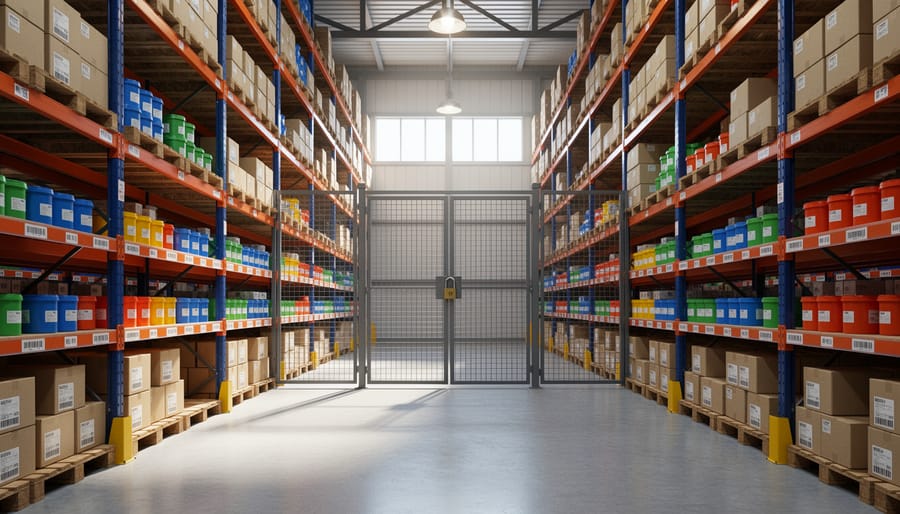
Organizations can deploy several immediate risk mitigation measures while building longer-term resilience. Start with strategic inventory policies that buffer against short-term disruptions. Increase safety stock for critical battery materials by 15-30%, focusing on components with the highest concentration risk like precursor cathode materials where China holds 95%+ market share. This provides breathing room if export approvals are delayed, though you’ll need to balance carrying costs against supply security.
Contract renegotiation offers another quick win. Add force majeure clauses that specifically address export control changes, and negotiate multi-sourcing requirements that prevent suppliers from single-country dependencies. Request quarterly transparency reports showing geographic origin of raw materials and processing locations. Some contracts now include price adjustment mechanisms tied to supply disruption events rather than just commodity prices.
Industry consortia multiply your leverage. Join sector-specific groups working on supply chain transparency and collective purchasing agreements. These collaborations reduce individual negotiating burden and create shared early-warning systems for emerging risks. Government engagement programs like those supporting the February 2026 IEA Ministerial Declaration on critical minerals security can provide co-investment opportunities and regulatory guidance.
Technology hedging protects against material-specific disruptions. Maintain design flexibility to switch between battery chemistries if one supply chain tightens. Some manufacturers now qualify both NMC and LFP cathode materials in product lines. Integrate AI battery safety analytics to optimize performance across different chemistries rather than optimizing for a single material type.
Balance costs by prioritizing mitigation where concentration risk is highest. Not every component requires diversification, but precursor materials, LFP cathodes, and other segments with near-monopoly supply deserve immediate attention alongside other equipment vulnerabilities like turbine quality risks.
Verifying Your Supply Chain Resilience
Testing your supply chain resilience requires moving beyond theoretical planning to measurable verification. Without concrete metrics and regular stress testing, organizations risk discovering vulnerabilities only when disruptions occur, exactly when options are most limited.
Start by establishing a verification framework that tracks four critical dimensions. First, measure geographic concentration across your supplier base. Calculate the percentage of volume sourced from each country or region; if any single geography exceeds 60% of your critical materials supply, your concentration risk remains high despite mitigation efforts. Second, track inventory coverage ratios by comparing your strategic reserves to average monthly consumption. For materials dominated by concentrated suppliers, maintain at least 90 days of inventory; for diversified supply chains, 45-60 days may suffice. Third, quantify contract flexibility by scoring agreements on a 1-5 scale based on force majeure clauses, alternative sourcing provisions, and penalty structures for non-delivery. Average scores below 3 indicate inadequate contractual protection. Fourth, document your supplier response times by measuring how quickly secondary suppliers can scale production if primary sources fail.
Conduct quarterly stress tests using scenario analysis. Model three disruption types: sudden export restrictions similar to China’s November 8, 2026 battery controls, natural disasters affecting key processing facilities, and simultaneous delays across multiple logistics routes. For each scenario, calculate your operational runway, how many days you could maintain production before materials run out. Organizations with diversified supply chains and adequate inventory should sustain operations for at least 120 days under single-source disruption scenarios and 45 days under multi-source scenarios.
Implement a systematic verification process:
- Monthly supplier audits: Review production capacity reports, shipping documentation, and inventory positions from all primary and secondary suppliers to verify stated capabilities match reality.
- Quarterly portfolio reviews: Reassess your supplier concentration ratios, contract terms, and inventory levels against your established thresholds, adjusting procurement strategies when metrics drift outside acceptable ranges.
- Biannual tabletop exercises: Simulate major disruptions with cross-functional teams, identifying decision points, communication gaps, and resource constraints that would emerge during real crises.
- Annual strategy refresh: Evaluate whether your risk tolerance, market conditions, and supplier landscape have shifted enough to warrant fundamental changes in your diversification approach.
Beyond scheduled reviews, establish trigger points that mandate immediate strategy reassessment: any supplier accounting for more than 40% of volume facing regulatory investigation, new export controls announced by major producing countries, or three consecutive months where alternative suppliers miss delivery commitments. Given the concentration risks highlighted in the IEA’s February 2026 analysis, these verification practices differentiate resilient organizations from those merely documenting theoretical contingency plans.
Track leading indicators rather than waiting for disruptions to reveal weaknesses. Monitor news from major producing regions, regulatory filings from key suppliers, and industry reports on capacity additions outside dominant geographies. When Chinese precursor cathode materials maintain 95% market share as identified by the IEA, even small disruptions create outsized impacts, making continuous verification essential rather than optional.
Frequently Asked Questions About Clean Energy Supply Chain Risks
How quickly can alternative supply chains be established?
Building new refining and processing capacity typically takes 5-7 years from project approval to commercial production, though expanding existing facilities may be faster. However, establishing supplier relationships, securing contracts, and integrating new sources into your operations can begin immediately and show results within 12-18 months.
What are the cost implications of diversification?
Geographic diversification often increases material costs by 10-25% initially due to smaller scale operations and higher logistics expenses. These premiums typically decrease as new supply sources mature and economies of scale develop, while the insurance value against disruption can far outweigh the incremental cost.
Can recycling significantly reduce dependence on primary materials?
Recycling will become increasingly important but cannot solve near-term concentration risks since most batteries haven’t reached end-of-life yet. By the mid-2030s, recycled materials could supply 15-20% of demand, providing meaningful but not complete relief from primary supply constraints.
How do trade policies affect supply chain strategy?
Export controls like China’s regulations effective November 8, 2026 directly impact material availability and approval timelines. Organizations must monitor policy developments continuously and maintain flexibility in sourcing strategies, as trade restrictions can shift the economics of different supply routes overnight.
What role do international agreements play in mineral security?
Frameworks like the February 19, 2026 IEA Ministerial Declaration create political momentum and coordination mechanisms for developing alternative supply chains. While these agreements don’t guarantee material availability, they signal government support for domestic processing investments and can unlock financing for diversification projects.
The answers to these questions reveal a central tension in supply chain risk management: meaningful diversification requires years of investment and coordination, yet the IEA’s February 2026 analysis identifies concentration risks that demand immediate attention. Organizations can’t wait for perfect alternatives to emerge. Instead, successful navigation requires parallel tracks, taking short-term protective measures like strategic inventory positioning and contract renegotiation while simultaneously investing in the longer-term structural changes needed to reduce dependence on concentrated supply sources. The companies and regions that start now will be better positioned when tighter supply conditions emerge.
The IEA’s February 2026 analysis reveals the concentration risks embedded in clean energy supply chains, but identifying vulnerabilities is only the starting point. Real resilience demands action across four interconnected dimensions: assessing your current exposure to single-source dependencies, diversifying suppliers and processing hubs beyond the 80-95% concentration in China, strengthening domestic and regional capacity for critical minerals processing, and continuously verifying that your mitigation measures deliver measurable results.
No single entity can solve these challenges alone. Industry must commit capital to alternative suppliers and technologies. Governments need coherent policies that support domestic processing while maintaining open trade. Investors should price supply chain resilience into their decisions rather than treating it as an externality. The IEA Ministerial Declaration of February 19, 2026 signals growing political will, but translating that commitment into operational capacity takes years of sustained effort.
The supply chain landscape will continue shifting as new processing facilities come online, battery chemistries evolve, and recycling infrastructure matures. Organizations that treat resilience as an ongoing discipline, not a one-time project, will navigate these transitions more successfully than those waiting for perfect certainty before acting.